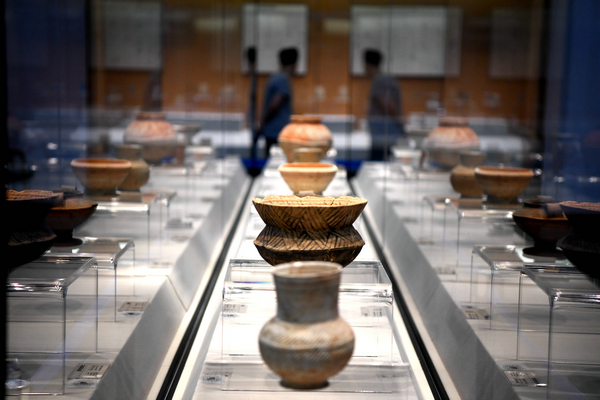
Tanshishan Site
Overview
The Tanshishan Site is a significant archaeological site located on China's southeast coast in Fujian province. It represents the earliest named archaeological culture in this region and is recognized as the source of marine culture in Fujian and Taiwan during the pre-Qin period, which was before 221 BC. The site was discovered in 1954 and spans an area of more than 30,000 square meters. It is known for its well-preserved cultural artifacts that date from the Neolithic to the Bronze Age. In October 2021, during the 100th anniversary of modern Chinese archaeology, the Tanshishan Site was selected as one of China's Top 100 Archaeological Discoveries of the Century, being the only site from Fujian province to receive this distinction.
Historical Significance
The site has played a pivotal role in redefining the historical narrative of Fujian civilization, pushing its history back from 3,000 years to 5,000 years ago. This has substantiated the theory proposed by Su Bingqi regarding the pluralistic origins of Chinese civilization. The excavation and research at Tanshishan serve as a model for prehistoric culture studies in Fujian, demonstrating that the ancestors of the Tanshishan culture were pivotal in the creation of the humanistic lineage in the Min districts. These peoples were engaged in various activities such as hunting, farming, pottery-making, and weaving, and expanded their exploration of the ocean, contributing to the origins of Austronesian cultures.
Discovery and Excavations
The discovery of the Tanshishan Site occurred in January 1954 in Tanshishan village, Minhou county, Fuzhou city. Villagers inadvertently unearthed a collection of ancient pottery, stone tools, and skeletal remains during the construction of a dam across the Minjiang River. Subsequent investigations by experts revealed the site’s significance as a cultural heritage of the Late Neolithic period. Over the years, ten archaeological excavations have been conducted, uncovering over 2,000 square meters of relics including trenches, ash pits, sacrificial pits, pottery kilns, stoves, pillar holes, and more than 80 burials. The site has yielded a rich variety of cultural relics such as tools made from stone, bone, horns, teeth, shells, pottery, jade, and primitive porcelain, reflecting the distinctive regional maritime cultural characteristics of the Tanshishan culture.
Marine Culture and Artifacts
The Tanshishan Site is recognized as the cradle of Fujian's marine culture. During the Neolithic period, the ancestors of Tanshishan culture demonstrated significant maritime cultural characteristics. Excavated artifacts such as shellware and pottery kettles are representative of marine culture. Shellware, a distinctive cultural artifact, includes tools like shovels, knives, and chisels made from oyster shells, showcasing unique production techniques that were adapted from stone tool-making methods. Pottery kettles, frequently unearthed at the site, reveal insights into the dietary practices and social distinctions among the Tanshishan people. This food culture, characterized by the cooking of river and seafood separately, is a distinctive feature that contrasts with the cultural remains found in the Yellow River and Yangtze River basins.
Cultural Chronology and Pluralistic Civilization
In 1963, the archaeological community designated the Neolithic cultural remains found at Tanshishan as Tanshishan culture, particularly noted for its geometric hard pottery. Subsequent excavations, including one in 1996, have helped clarify the chronological framework of the site. Experts have identified at least four cultural phases at the Tanshishan Site, ranging from 5,500 to 2,700 years ago. These phases correlate with significant cultural periods in northern China, such as the Yangshao culture, Longshan culture, and the Shang and Zhou dynasties. The evidence gathered from the Tanshishan Site supports Su Bingqi's theory of the pluralistic origin of Chinese civilization, extending the history of Fujian civilization to 5,000 years and highlighting the diversity of cultural development across China.
Future Research and Preservation
The Tanshishan Site holds immense potential for advancing the study of ancient Fujian culture and prehistoric navigation technology. Efforts to strengthen multidisciplinary research are underway to uncover further achievements at the site. The Museum of Tanshishan Historical Relics is utilizing digital technology for the preservation and display of the site, digitally capturing archaeological excavation areas and specimens. This digital archive serves as a foundation for future archaeological endeavors. Furthermore, initiatives are in place to promote the creative transformation and innovative development of Tanshishan culture, including comprehensive research on its origin and distribution, and efforts to map prehistoric cultural sites in the region. Article reference1. Tanshishan relics prove pluralistic origin of Chinese civilization. chinadaily.com.cn. 2023Photo Gallery(4 pictures)CategoriesCultural HeritageTagArchaeological DiscoveryTangible Cultural HeritageRelatedTanshishan CultureCatalogue1. Overview2. Historical Significance3. Discovery and Excavations4. Marine Culture and Artifacts5. Cultural Chronology and Pluralistic Civilization6. Future Research and Preservation- - - []








